An academic research workspace

Research, written properly.

PassResearch takes a student from a rough topic to a submitted document — real scholarly discovery, traceable citations, structured chapter writing, supervisor corrections and professional export. One connected workspace, not a chatbot with an editor attached.

Free to start
No card required
Four providers
One search interface
Real documents
Validated DOCX, PDF on paid plans
A student writing a chapter on a laptop with a printed reference open beside it.
Chapter by chapter, with the source open beside the draft.
01

The document

The output already reads like a submitted chapter

Sections are stored separately so a long dissertation stays fast to open, and the assembled document keeps the structure a supervisor expects to see.

  • Front matter, chapter headings, section content and the bibliography assembled in order.
  • Consistency checks flag missing citations, unresolved references and retracted sources.
  • Validation blocks export when a document has no content, instead of producing an empty file.

Chapter Two — Literature Review

Drafting1 842 words

2.3  Empirical literature

Studies of institutional reporting in the region have consistently reported a gap between the data collected at district level and the figures released nationally. Where the discrepancy has been examined directly, it is attributed to differences in the point at which records are aggregated rather than to errors in the underlying returns(Nakato & Okello, 2023).

A smaller body of work has taken the opposite approach, treating the published series as the unit of analysis and asking how far it can be reconciled with administrative records before the two diverge(Ministry of Education, 2021). Neither approach has yet been applied to the sub-county level, which is where this study is positioned.

Sources cited in this section2 verified0 unverified

Illustrative extract. Inside the product every figure is counted from your own records and every citation resolves to a stored source — nothing is simulated.

One connected workflow

From a rough topic to a submitted document

Search, evidence, citations, chapters, corrections and export share one project. Nothing has to be copied between a search site, a reference manager and a word processor.

Scholarly providers
OpenAlex · CORE · Semantic Scholar · Crossref
Citation styles
APA 7 · Harvard · MLA · Chicago · IEEE
Export
DOCX on every plan · PDF on paid plans
02

The connected workflow

Everything a research project actually needs, in the order you need it

Each step inherits from the one before it. Change an objective and the platform shows you which questions, sections and instruments are affected.

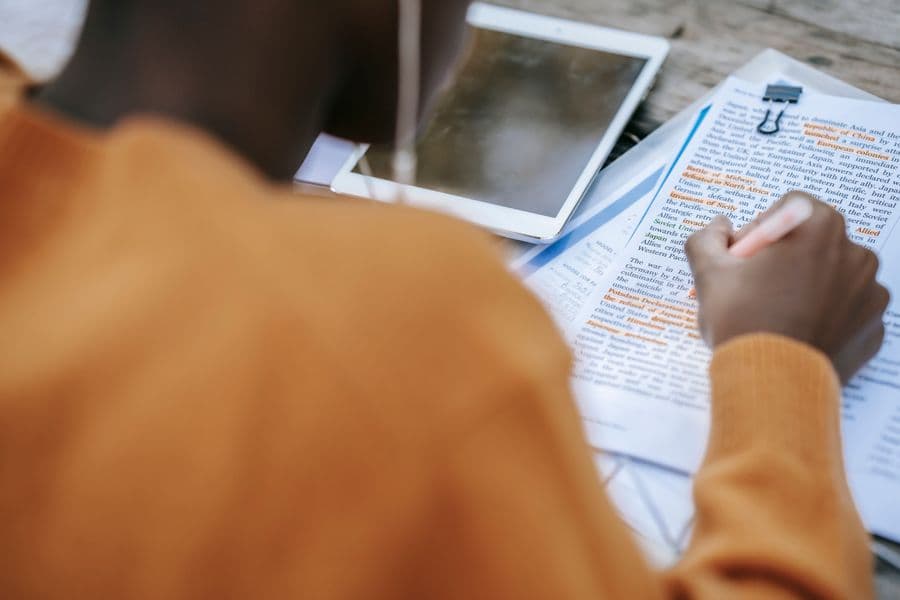
Handwritten study notes with key sentences highlighted beside an open textbook.
  1. 01

    Set up the project

    Enter your institution, program, topic and citation style. Save a draft at any point — nothing is required before you start.

  2. 02

    Build the blueprint

    Problem, purpose, objectives, questions, scope and methodology outline — kept consistent with each other and versioned.

  3. 03

    Discover real sources

    Search OpenAlex, CORE, Crossref and Semantic Scholar through one interface. Every record keeps its provenance and identifiers.

  4. 04

    Manage the evidence

    Save sources into the library, record why each one matters, map them to objectives and build a literature matrix.

  5. 05

    Write chapter by chapter

    Sequential sections with autosave, versions, status and citations inserted from stored source records.

  6. 06

    Validate and export

    Check the document for missing citations and unresolved references, then export a real DOCX or PDF.

Rows of academic books on tall library shelves.
A student searching for scholarly sources on a laptop beside a notepad.
03

The evidence library

Every source keeps its provenance — and its limits

Search four scholarly providers through one interface, save what matters, and record why it matters. A discovered record is never displayed as verified.

  • DOI, OpenAlex ID and provider URL preserved with each record.
  • Notes, collections, tags and objective links stored against the source.
  • Duplicate detection by DOI and normalised title — similar titles are never merged silently.
See the discovery step
04

Capabilities

Built around evidence, not around autocomplete

The parts of a research project that actually take time — discovery, evidence, citations, corrections, analysis and export — designed as one system.

01

Unified scholarly discovery

One search across four providers, with filters, sorting, provenance and partial results when a provider is unavailable.

02

Verification you can see

A discovered record is never shown as verified. Metadata verification, full-text review and claim checks are separate states.

03

A real citation engine

CSL-based formatting — APA 7 by default, with Harvard, MLA, Chicago and IEEE. Citations resolve to stored records, not typed strings.

04

Proposal and chapter builder

Five-chapter dissertations, extended proposals, journal manuscripts or your own structure — sections stored separately so long documents stay fast.

05

Supervisor corrections

Import marked-up documents or paste comments, link each correction to a section, and track imported → analysed → applied → verified.

06

Data and instruments

Upload CSV or Excel, inspect columns and quality issues, run documented tests on your own data, and map questions to objectives.

07

Grounded assistance

The assistant works from your project context and retrieved sources. When there is no evidence, it says so instead of inventing prose.

08

Professional export

Assemble front matter, chapters, tables and a bibliography, then generate a validated DOCX — and PDF on paid plans.

05

Who it is for

One workspace, four levels of research

The same project structure scales from a final-year report to a doctoral thesis. Higher levels simply use more of it.

A lecturer addressing a full classroom of students.

Undergraduate

Final-year projects

An outline, real sources, chapters and a Word document you can hand in.

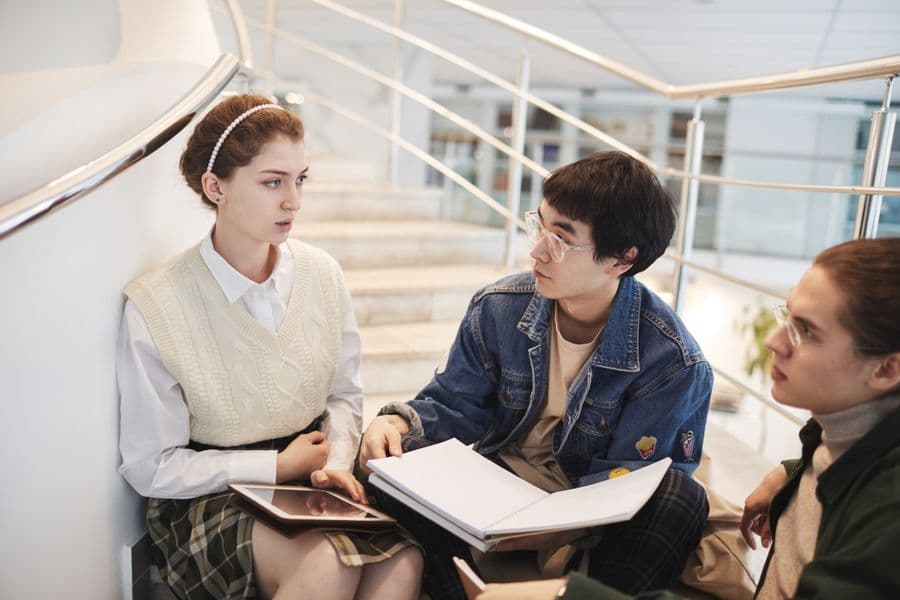
Students talking together on campus steps between sessions.

Honours & master's

Dissertations and theses

Literature matrices, supervisor corrections and versioned chapters.

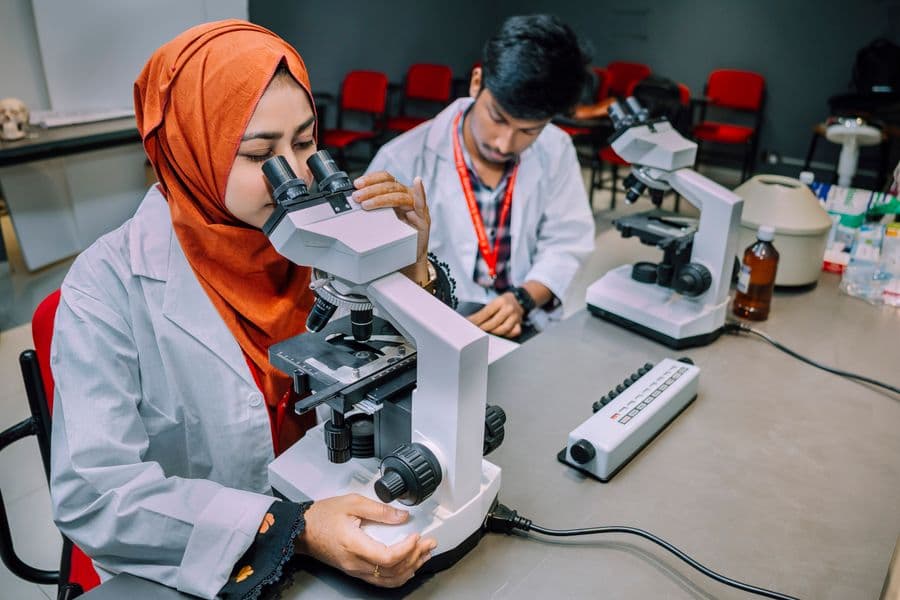
Postgraduate researchers working at laboratory benches.

Doctoral

Long-form research

Instruments, datasets, analysis runs and a long document that still opens quickly.

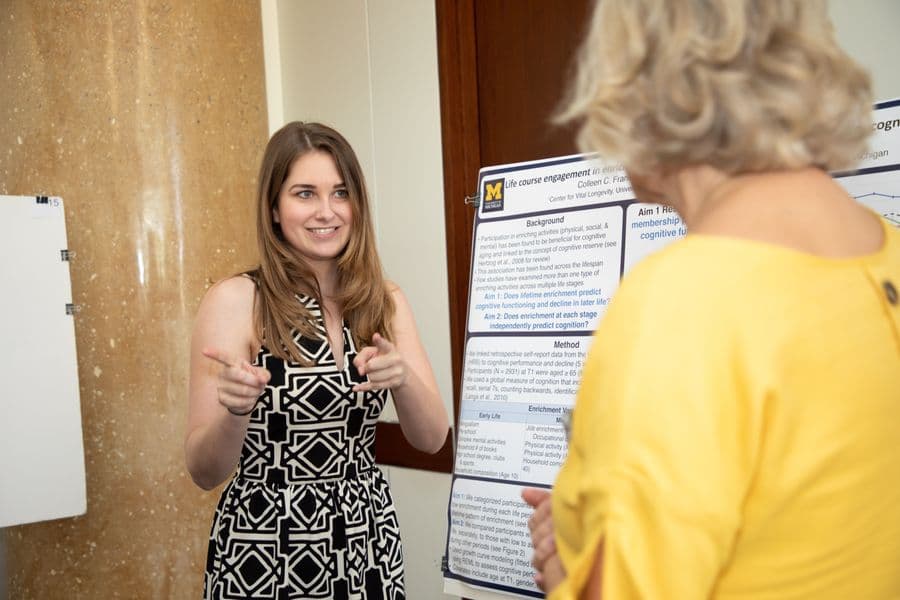
Two people working through a plan together in conversation.

Supervision

Review and corrections

Feedback linked to the exact section it refers to, with the original preserved.

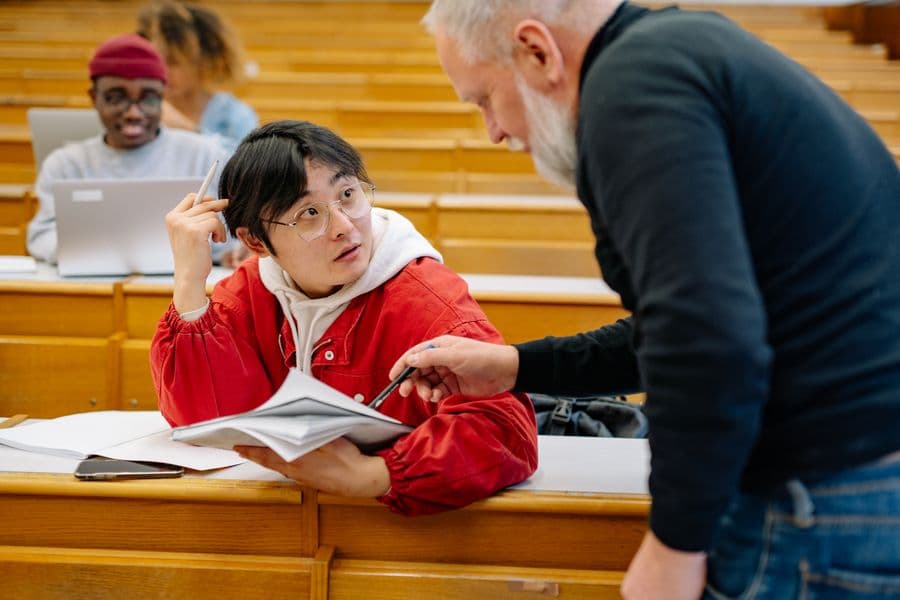
A supervisor and a student reviewing a printed chapter together.
06

Academic integrity

A tool that helps you do the work — not one that pretends you did

Fabricated evidence destroys a research career. PassResearch is deliberately designed so that unsupported claims are visible rather than convincing.

  • No fabricated sources, citations, statistics, quotations or supervisor comments.
  • Every displayed metric is a count over rows you actually created.
  • Suggestions are labelled and never silently overwrite approved writing.
  • Providers without credentials report themselves as unavailable — never faked.
Read the full integrity statement
A postgraduate student reading a journal article with a highlighter in hand.

Source verification states

  • Discovered

    A record returned by a provider. Not yet checked.

  • Metadata verified

    Identifiers and bibliographic fields cross-checked.

  • Partially verified

    Some fields confirmed, others still missing.

  • Verified

    Reviewed by you and confirmed against the record.

  • Retracted

    Flagged, with the evidence for the flag preserved.

Begin

Start on the free plan and see the whole workflow

Create a project, run real searches, save sources, draft a chapter and export your own writing. Upgrade only when you need more room.

Reader favourites

Most read this month

Ranked by how many readers actually opened each guide in the last thirty days.